Stefan Stewart appears remarkably calm right now, especially considering we're about to drop into a 15-foot-wide and God-knows-how-deep hole in the ground, a cave forbiddingly known as the Devil's Staircase. Martel "Malibu" Taylor has lit a small fire to help ward off a growing influx of mosquitoes, and I'm peering downward into the void. Sheer limestone walls recede into inky darkness. And the bottom? What bottom? This cave, in a remote section of northwestern Jamaica called Cockpit Country, hasn't seen a visitor in almost three decades. We spent the better part of a full day bushwhacking our way here, and if anything goes wrong, we're on our own. There is no cell phone reception, and the chance that anyone will stroll by this spot in the jungle anytime soon is slim at best. Stewart, a lanky, 56-year-old Ontarian who seems to derive nourishment solely from canned sardines, Canadian cigarettes and the occasional Red Stripe, directs me to tie a rope around a tree for my descent. I check the knot for the sixth time as he hands me a radio. "I'll be communicating back to you," he says. I quickly consider the consequences of that radio going silent – and just as quickly dismiss the thought.
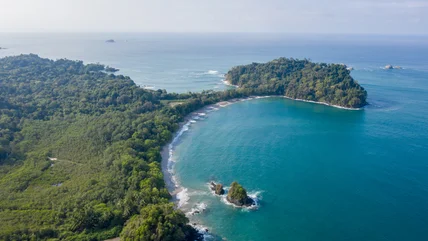
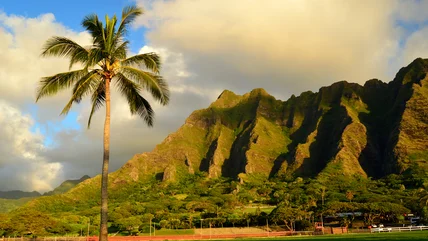
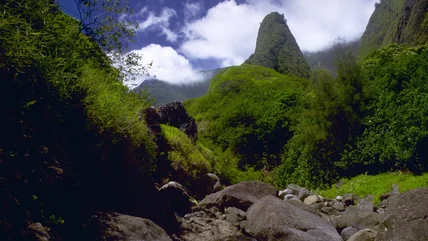
From the air, this 500-square-mile area – not far from Montego Bay and Ocho Rios – looks like a huge green egg carton, with steep, conical towers of limestone, some taller than 300 feet, and below, a maze of ravines and deep, bowl-like depressions full of hidden caverns and sinkholes. The term Cockpit Country comes from these cavities, which supposedly resemble the arenas, called cockpits, once used for cockfighting. It's a topography formed by hundreds of thousands of years of erosion, and that process has made it a treacherous place to explore: As seeping rainwater eats away at the ceilings of underground chambers, seemingly solid ground is often just a fraction of an inch thick, ready to collapse under a hapless step.
Geologists estimate that there are thousands of caves like the Devil's Staircase on Jamaica, most of them still undiscovered. Stewart, who first came to the island in 1987, has explored more than 250 of them, some 50 of which were first-recorded descents - including one that led to the discovery of the 636-foot-deep Smokey Hole Cave, the deepest hole found on the island so far. "It's hard to be an explorer these days, so it's nice to be able to explore something that no one has been to before," he says. "But there's also the discovery and exploration of the flora and fauna and what the water is doing, rather than just being the first person to travel through it and have a look at it. It's also discovering what's living in the caves."
Right now, Stewart's on week three of an expedition that has him slashing through shrubbery, plunging into caves, swimming through underground rivers and frequently crawling through bat guano - or "rat bat dung" in Jamaican patois. He is typically seen cutlass by his side, shoulders stooped, eyes open dangerously wide, doing everything but pricking his ears to listen to the sound of the bush while plotting GPS waypoints into his Garmin handheld. In 2002, with financial support from the U.S. Nature Conservancy, he founded the Jamaica Caves Organization, a team of local and foreign volunteers who study the island's caves and work to protect them from a host of threats, notably by lobbying hard against the commercial strip mining of an aluminum ore called bauxite. The JCO aims to educate locals too, who often pose an unwitting menace to the caves, unaware of the connection between a hole in the ground used as a garbage receptacle and the drinking water that comes out downhill, or of the devastation wreaked on a cave's ecosystem by collecting guano, which is used as a fertilizer. "We are the only guardians of Jamaica's caves," says Stewart.
Stefan Stewart is famous and well liked in these parts. Everyone we meet in the nearby towns of Windsor and Sherwood, and as far southwest as Accompong, greets him by name. But Cockpit Country wasn't always quite so hospitable to strangers. Place names such as Me No Sen You No Come and the Land of Look Behind give clues to its mysterious, rebellious past. It's a history tied to the only people able to defy the British incursion into the region, and one for whom Cockpit Country's daunting terrain proved a boon: the Maroons.
Slaves released by Spanish settlers fleeing the British occupation of the island in 1655, the Maroons gave the invaders some stiff opposition. They'd been trained for fighting by the retreating Spanish and brought to the conflict a few guerrilla tactics as well, including head-to-toe camouflage and coded, long-distance communication using the abeng, a bugle made from cow horn.
In 1690, the Maroon leader Cudjoe initiated a long but ultimately successful resistance, and in 1739 the British signed a peace treaty granting the Maroons 1,500 acres of land and autonomy from the colonial government. Cudjoe became leader of the Trelawny Maroons, and his brothers took over other Maroon settlements, including the present-day center of Maroon culture, Accompong. There, thousands of Maroons gather each year on Cudjoe's birthday, January 6, to celebrate their freedom. "We were free a hundred years before emancipation," says Maroon leader Sydney Peddie.
The Maroons of Accompong remain self-ruling and self-sustaining, happily independent of government meddling. Cockpit Country is divided into Maroon land and a forest reserve - although many Maroons consider the reserve to be their territory too. Accompong's 700 or so residents pay no taxes or fees on the land, which passes on within families and can't be sold to foreigners. There is no police force; Babylon, as the police and outside government are called here, must be invited, just as – in accordance with Cudjoe's treaty – the British colonial government interfered only in crimes that carried a capital punishment.
These days, wary of the outside world and fiercely protective of their land, the Maroons are particularly careful about the types of tourism and commercial activity they allow. "Our land carries value from generation after generation," says Melville Currie, Peddie's right-hand man. "We will not sacrifice the future of our children. Our lands have no price."
To that end, the town's elders have continued to oppose bauxite mining (despite large monetary offers) and embraced a community-based, culturally sensitive brand of tourism. Tour guides are local farmers, and hotel and restaurant proprietors are mostly Jamaicans; the money you spend in the Maroon community stays right there.
For a day-tripper, there's plenty of opportunity for self-guided discovery in and around the towns of Jamaica's Cockpit Country. The traffic-free roads near Windsor, Dromilly, Quick Step and Accompong are ideal for miles of leisurely touring. Diving into the bush is a different matter, however: You absolutely must have a local guide with you. With no water sources beyond the occasional puddle, plenty of sinkholes, no discernible landmark features and no forest ranger service to speak of, Cockpit Country can be treacherous to wander on your own.
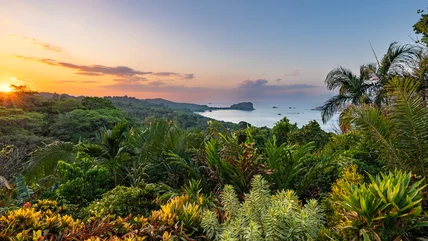
And yet, despite the dangers of falling into a sinkhole or getting lost in the wilderness, Cockpit Country is a surprisingly benign – even bountiful – jungle. There isn't one venomous insect or snake species; the cave-dwelling bats effectively control the mosquito population; and the red-backed ticks don't carry Lyme disease (though, unfortunately, they do tend to steer for the groin). There's no shortage of tasty things to eat either, including native yams, oranges, bananas, coconuts, and Jamaican apples and sugar cane, and June brings the mango season, with as many as 25 different varieties yours for the picking, often growing at arm's reach right along the trails. And what you don't find growing wild you can purchase at farm stands along any roadway: pineapple, plantains, breadfruit, a potato-like root called dasheen, cassava, callaloo, bok choy, Scotch bonnet peppers and the perfectly named – and very rare – custard apple.
Guides such as Taylor – a founding member of the JCO, who charges $20 and up for hikes along the 10-mile-long Troy-Windsor and Quick Step-Windsor trails – have an encyclopedic knowledge of the land and its living things, pointing out water sources and swimming spots, identifying edible fruits, describing the medicinal properties of roots and herbs, and sharing insights into the habits of birds (27 of 28 endemic species are found in Cockpit Country). Most guides are also well versed in Maroon history, although be prepared to hear different accounts depending on your location.
When you're ready to do a little exploring below Cockpit Country's verdant surface, the Jamaica Caves Organization offers serious cave tours for about $150 per person, with all funds going to support cave preservation and replace costly equipment. It's money well spent, helping to ensure not just the JCO's survival, but your own. Venturing into these caves – holes deep enough to require ropes and harnesses and headlamps – is not for the faint of heart, and definitely not a feat attempted without direction from an expert. The Jamaican police actually bring in Stewart and the JCO to assist in hauling up the bodies of the hapless.
That's a tough image to shake right now, standing at the gaping mouth of the Devil's Staircase, gathering my nerve to descend into the darkness. "It's a three-dimensional environment," says Stewart, giving me a quick spelunking primer. "Rather than walking on a horizontal surface, there's uphill and downhill in caves: You go along a bit; you're winding down; there's spirallike passages; you get to do all this three-dimensional mapping and mind where you are. It's a very unique thing compared with the outside world." And with that, I strap into a harness, turn on the headlamp on my helmet, and head into the hole.
About 30 feet below the surface, I accidentally bang against a large stalactite. It responds with a metallic ring. I tap a smaller stalactite next to it, and the pitch is slightly higher. Cave music. Dropping below an overhanging section of stone, I lose the wall and continue downward, slowly twirling in midair as the sun-filled hole above me gets smaller and smaller. I seem to be the only living thing here. There are no bats, no insects, nothing – until I hear mild chirping of a small frog. I wonder how he plans to get out of here.
At last, about 150 feet down, I plant my feet on the cave's floor. There's an opening to a deeper chamber nearby, and next to it a smaller crawl hole that leads, well, somewhere; I peer in but can't see the bottom. Everywhere I turn my lamp, falling dust clouds my view. It covers me and my gear with a layer of red grime and shuts down my camera after only a couple of shots. It's hot down here, and I am utterly alone. And aside from my amphibian buddy's croaking, it is completely quiet. From above, the distant voices of Taylor and Stewart blend in with the chirping of birds. I pause my breathing for a few seconds to savor the silence - and the solitude. Then I get back on my rope and begin the long climb to the surface. As I ascend the Devil's Staircase toward the light, I can't help but feel the thrill of discovery.
Later, bragging about my explorations to the proprietor of Miss Lilly's, a B&B and bar in nearby Coxheath, Lilly Bolt asks me if I'd come upon the place "where the butterflies are."
"No," I said. "How do you get there?"
"It's a hidden secret," she replied, then smiled at me and shared a silent but meaningful exchange with another bar patron. Rather than feeling disappointed by her enigmatic response, I felt somehow heartened. The Cockpit Country and its people had welcomed me with unwavering warmth, but there were a few things they weren't eager to share with an outsider. And that seemed OK with me, because some secrets, like where the butterflies are, are best left untold.
For more information on backcountry hikes and cave tours in Cockpit Country, contact the Jamaica Caves Organization (jamaicancaves.org). When in Cockpit Country, make a point of stopping by Miss Lilly's Bar and Shop in Coxheath (876-788-1022); Lilly knows everyone – including the world's fastest man, Usain Bolt, her nephew, who's prone to stop by for a hug. She offers rooms with showers too, breakfast included, for $30 a night, and does dinners by advance request.