Close

Member Login

Invalid username or password.
Incorrect Login. Please try again.

Not a member? Register Now!

Signing up helps us keep offensive content off of our site. Take a moment to register or click here to learn more about our privacy policy

Puerto Rico

Nearly 500 years old, San Juan, Puerto Rico is the oldest capital under the U.S. flag. Throughout its five centuries, the city and the country it governs have amassed a rich history and a culture that beg exploration.

Puerto Rico

Overview

Collapse

Nearly 500 years old, San Juan is the oldest capital under the U.S. flag. Throughout its five centuries, the city and the country of Puerto Rico have amassed a rich history and a culture that beg exploration.

Restored to much of its former glory, Old San Juan is crammed with history. El Morro, a fort built in 1591, stands much as it did in centuries past watching over the city's harbor. At the opposite end of the colonial city, Fort San Cristobal was designed to ward off surprise land attacks. La Casa Blanca on Calle San Sebastian was the home of Ponce de Leon's family for more than two and a half centuries; It's the oldest building in the historic district. La Fortaleza, the Western Hemisphere's oldest continuously inhabited executive manor, strikes an elegant pose on the Calle Recinto Oeste. So far, six governors have walked its gilded halls and slept in its stately rooms.

DINING AND NIGHTLIFE

After dark, visit New San Juan for its flamenco dancers, piano bars, open-air concerts, discos, casinos, folkloric shows and Latin revues.

In fact, San Juan, from the cobbled streets of the Old Town to the more modern boulevards of the Condado district or Isla Verde, is usually hopping until dawn. Casinos can be found in almost every major hotel, discos for all shapes and tastes go in and out of trendy favor, and there are always new restaurants to sample.

FESTIVALS AND EVENTS

San Juan is one of the Caribbean's most urban, and urbane, cities. The city hosts the annual Pablo Casals music festival, attracting the world's top classical musicians as well as the annual Jazz Festival, when the city really begins to swing.

ECO-ADVENTURE AND BEACHES

Beyond San Juan, the island boasts a wealth of natural attractions. El Yunque – America's only tropical rain forest in the National Forest system – and 19 other forest reserves are home to 20 orchid varieties and countless other flora and fauna.

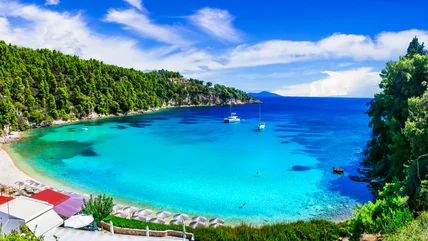
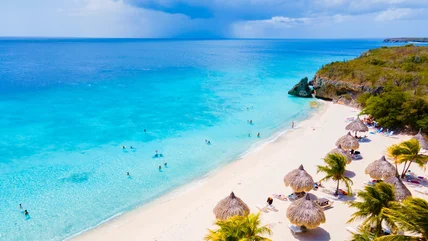
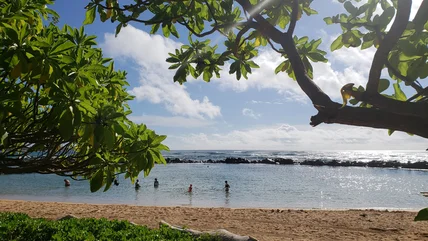
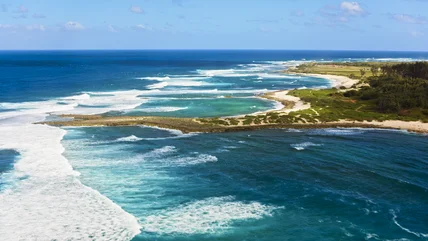
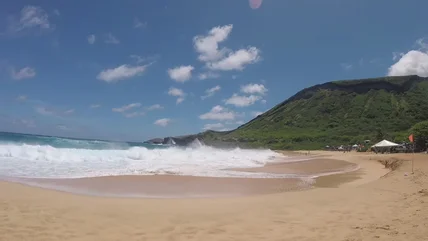
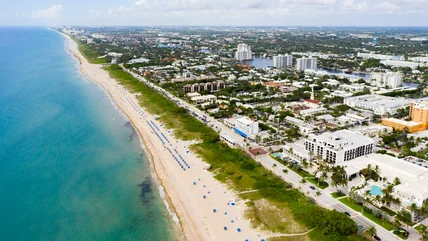
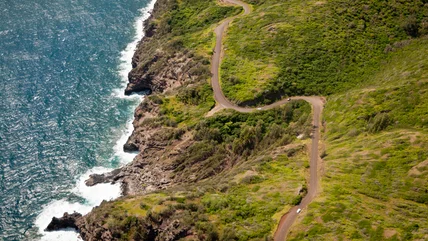
Water babies will love its 270 miles of coastline littered with innumerable beaches for snorkeling, sunbathing and world-class surfing. The island's massive central mountain range tops 4,000 feet and demands hikers take note.

On the north coast by Arecibo, the Rio Camuy, one of the world's largest underground rivers, has eroded its limestone ceiling, forming a series of caves and sinkholes. A tram lowers visitors into one of the sinkholes for a fascinating tour.

Those interested in the heavenly spheres will enjoy a trip to the visitor's center at the Arecibo Observatory, the largest radio telescope in the world.

DIVING AND WATER SPORTS

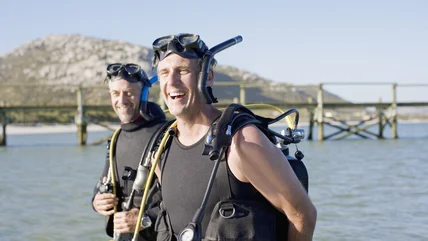
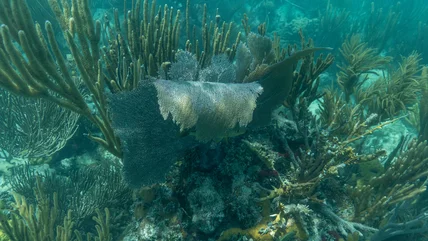
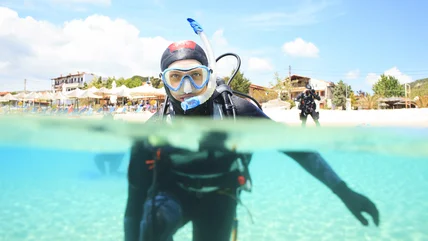
Snorkeling is excellent at a number of places around the island, while divers head to Desecheo, Fajardo, Mayaguez, Culebra, and especially La Parguera. The west coast of Puerto Rico is favored by surfers in the winter, when the rollers come crashing ashore, and anglers vie for big game fish in the rich waters east of San Juan.

If you need a vacation from your vacation, board a ferry or puddle-jumper flight for the quick trip to Puerto Rico's satellite islands, Vieques or Culebra, where you can stretch out on your own slip of sand for a few hours of blissful tranquility.

BEYOND SAN JUAN

Whereas Old San Juan is a three-dimensional history lesson, Ponce – the island's second largest city – is a living art class. Painters, poets and architects come to study the Neo-classical, art deco, and Creole styles that graciously intermingle in this gloriously restored 17th-century coastal town. The black-and red-striped Parque de Bombas (firehouse) shows Ponce's proclivity for the exotic.

North of Ponce, the Hacienda Buena Vista is representative of the coffee plantations that dotted the island in the 19th century. A demonstration of the preparation of the beans utilizes the plantation's original machinery. Overlooking the city, the Castillo Serralles is a throwback to Ponce's heyday as a rum and sugar cane producing center.

Ancient ball courts and carved stones in the Caguana Indian Ceremonial Park near the town of Utuado are remainders of Amerindian sports. Visit the park after a round of golf on one of the island's modern championship course and try to imagine the different rules by which they might have played.

HISTORY

The Taino Indians of Puerto Rico welcomed Columbus when he arrived at their island in1493. Ironically, Columbus intended the entire island to be named San Juan, and its main port "Puerto Rico" or "rich port." Somewhere along the way, the names got switched.

In 1508, the first European settlement was established under the guidance of Ponce de Leon. Thirteen years later, the settlement was moved to the vicinity of current San Juan.

At the end of the 16th century the English sent Sir Francis Drake to attack Spanish ships sailing from Puerto Rico and to capture the island, but he was rebuffed and quickly retreated in shame.

The Earl of Cumberland partially restored England's honor by seizing the mighty El Morro fortress. Attempts to secure the rest of the island were unsuccessful. In the early 1600s, the Dutch invaded Puerto Rico. The British, still inside the confines of the fort, steadfastly held their ground. The last time the British tried to claim territory on the "outside," a parade of citizens carrying torches, whom the British mistook for soldiers, scared them off the island entirely.

Following the Spanish-American War, Spain gave Puerto Rico to the United States. In 1917, the citizens of Puerto Rico were made citizens of the United States. In 1952, Puerto Rico, located more than 1,000 miles southeast of Miami, became a Commonwealth associated with the United States.

Plan your trip

Collapse
  • Tourist Information: 787-721-2400
  • Website: www.gotopuertorico.com
  • Language: Spanish and English.
  • Currency: US Dollar
  • Taxes: No departure tax. Local tax is included in all purchases. There is a 9% hotel tax in a non-casino hotel and a 11% hotel with casino.
  • Electricity: 110 volts/60 cycles
  • Documents: Visitors arriving from the U.S. or U.S. Virgin Islands do not need to show a passport or proof of citizenship -- just a photo I.D. Canadians must carry a birth certificate and photo I.D., and other foreign visitors should have valid passports.

Where to stay

image-

Digital Edition Subscriptions

  • Digital Edition
  • iPad Version