''Take your time, slow down. That's the only way you'll see what's really going on here.'' - Advice from a Bonairrean
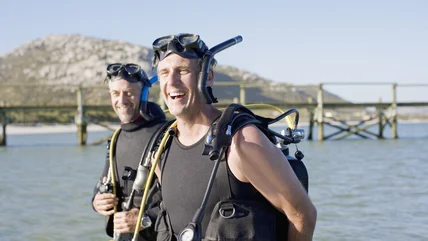
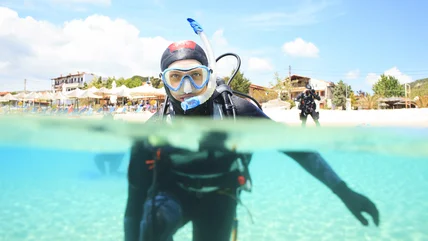
Whoever says Bonaire is flat...'' gasped Sipke Stapert, his muscular legs pumping furiously. ''...obviously hasn't been here,'' I gasped back as we biked up one of Bonaire's steepest hills. Yes, hills. As in those sizable bumps on the terrain that lie beyond the beaches and reefs that Bonaire is known for. Perhaps a bit too well known for, since most prospective visitors tend to discount the notion that there's much in the way of diversion here unless you clad yourself in neoprene and suck air from a tank. Not to suggest that the underwater attractions should be snubbed. With more than 50 dive sites around the main island and another 26 off Klein Bonaire, the uninhabited preserve just offshore, Bonaire's marine blessings and its dedication to protecting them have made it one of the foremost dive destinations in the world.
But I didn't come here to dive. I came to investigate exactly what's available for those who prefer to keep their heads above water, more or less, while in pursuit of an active vacation.
As it turns out, Bonaire is busily transforming itself into a well-rounded destination with a host of diversions for anyone who's game. And it's an island filled with engaging locals who are always eager to lead the way.
Stapert, a hunky native of the Netherlands and a guide for Sand Dollar Dive and Photo, volunteered to take me mountain biking. The outing began near 1,000 Steps, which like all of the island's popular dive and snorkel sites is marked by a roadside rock that has been painted bright yellow. For the record, there's really less than a hundred stone steps that lead down to the beach, but climb them with dive gear and it feels like a thousand.
Visitors nowadays will also spot rocks along the roadside painted either bright orange or green, the work of local biking enthusiasts who have marked nearly 480 miles of mountain-bike trails on the island and are producing a map of the network. Stapert led me off-road, where we began our steep ascent to an overlook with its astounding view of Bonaire's interior, the town of Rincon and the sea. I was puzzled by the bleached conch shells that lined the last stretch of rocky dirt road as it finally reached the overlook.
''It's hard to see the road in the dark, so someone put the shells down as markers. People like to come up here at night,'' Stapert explained with a sly grin.
Ah, welcome to Lover's Lane, Bonaire-style.
We headed back to the flatlands, biking past the entrance of the Washington-Slagbaai National Park and even catching a glimpse of the indigenous Bonaire parrot. Slowing down, Stapert pointed at a cluster of big rocks.
''If you're quiet and move slowly, sometimes you can see the iguanas,'' he said.
And suddenly I saw them - huge iguanas, easily ten times the size of the most common lizards, blue-tailed blousanas, that can be seen scurrying around the entire island.
We wheeled on, passing broad golden fields of maize and houses with goats tied up out front. The sun was high and hot as we ended our ride. My legs were numb and jangly, like worn-out rubber bands.
You think Bonaire is flat? Hang out with Sipke Stapert for a couple of hours.
''When I came to Bonaire five years ago, there were no traffic lights. Today, there still aren't any. That's how I judge quality of life.'' - Jerry Lignon, naturalist and Bonaire transplant
Discovered by Amerigo Vespucci in 1499, Bonaire changed hands several times after the Spanish colonized the island in 1527, and finally became a Dutch possession in 1816. Today, the Dutch influence is readily apparent in food and drink - fine chocolates, cheeses and Heineken beer are readily available - as well as in demographics. Kralendijk, a town of bright yellow buildings, is chock-full of Dutch-speaking blondes.
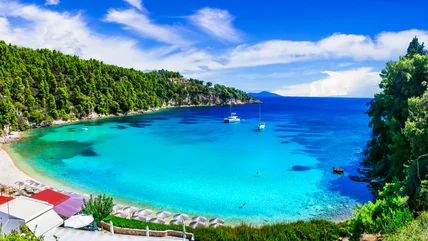
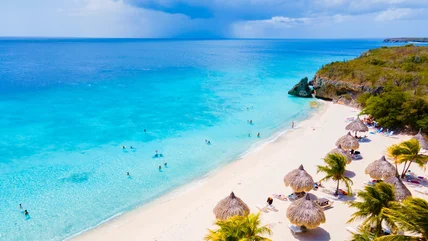
Just 24 miles long, Bonaire is easily toured by car and I set out my first day to get my bearings straight. The island's southern half is flat and nearly deserted except for snorkelers and divers who congregate where the yellow rocks mark notable underwater sites. This is where I found Pink Beach and the famous salt pans that provide one of the island's main exports. Seawater is collected in the huge basins, eventually leaving crystallized salt as it evaporates. Nearby are haunting rows of slave huts built in 1850 when as many as four men used to live in a dark, windowless structure less than 10 feet wide, its ceiling not even 5 feet tall.
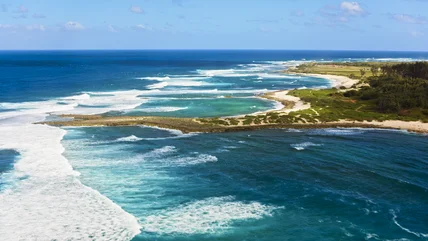
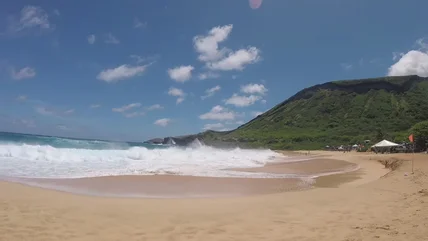
I drove along the windward side, on a road lined with cacti, to Lac Bay, where the sea crashes ashore and makes the rocky stretch look like it's studded with a series of spouting geysers. I passed only two other cars, plus a handful of donkeys and a few dozen flamingos - a curious, but pleasant combination.
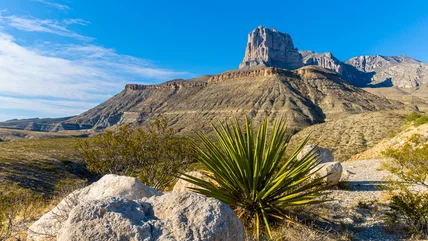
Bonaire's northern half seems like a completely different island. Home to 13,500-acre Washington-Slagbaai National Park, with lakes and desert vegetation, the area bears a strong resemblance to parts of New Mexico or Arizona. In addition to the Bonaire parrot, dozens of other species of birds nest there among iguanas, aloe vera and goats. The park is also home to Subi Brandaris, which at 780 feet is the highest point on the island. A well-marked trail leads to the rocky summit, which offers a spectacular view of the entire island.
Not far from the park are a series of rocky overhangs inscripted with fading red drawings, many of which look a lot like turtles. The drawings are thought to be from the Caiquetio Indians, who inhabited the area's limestone caves some five centuries ago. No one has yet figured out exactly what the inscriptions might mean, but looking out on the crashing waves and the palette of the sea as it changed from blue to green and back again, it was not hard to imagine some ancient artist standing on this very spot and finding inspiration in nature.
''Don't try this at home.'' - Sipke Stapert, as he kayaked into the breakers
The mangroves on Bonaire form a small network of tunnels that lead into Lac Bay's lagoon area, a nursery for marine life and home to several species of birds. Stapert and I headed to Terra Cora - literally ''Red Ground'' for the color of the dirt here - where we put in and paddled through a series of channels, thick with mangroves on both sides, eventually coming to a small lagoon.
''Look there, a baby barracuda,'' said Stapert pointing to a silvery flash in the water.
After my eyes adjusted, I began picking out other creatures beneath the water's surface - jellyfish, crabs and gray snapper. Most evenings, Stapert told me, you can usually spot stingrays here, too. We paddled into the wind as osprey and frigate birds soared overhead.
At Lac Bay, the popular windsurfing hangout, Stapert plucked a huge starfish out of the water.
''This is a small one, only about three pounds,'' he said, tossing the starfish back where it belonged. ''They get much bigger around here.''
Along the shoreline, waves rumbled in. Stapert studied the surf, then put his paddle to work.
''And for the more experienced kayaker, we do this,'' he said, heading out into the fray. I watched as he rode wave after wave to the beach. Maybe next time....
''We don't want anyone to find out about those caves! Then there will be tourists and garbage. No, we want to keep Bonaire the way it is.'' - Lucille Martijn, chef and longtime resident
It's not as if the tourist board doesn't acknowledge Bonaire's caves, or that visitors have never been in them, but a lot of residents would prefer if they were kept secret. Located on the leeward side of the island, the Barcadera caves are the most well-known, but others dot the terrain.
The caves have enormous stalactites and stalagmites, and underground channels with clear water, but most importantly, they are home to the island's population of bats, 21 species to be exact. The bats pollinate the island's flowers, which makes the flying mammals much-loved by residents who are adamant about keeping this natural resource undisturbed.
I kept pleading with anyone who would listen that I wanted see the caves and finally convinced one local, who asked not to be identified, to take me to Barcadera. It's probably the easiest cave system to access, with wide stone steps leading the way to one of the openings.
''Wear some shorts you don't mind getting torn up,'' my guide advised.
We hiked down to the entrance of several connecting sections. Ducking to enter the first opening, we moved on in a semi-stoop to view the stalactites and stalagmites in the cool cave air.
''You want to see the bats?'' my guide smiled and maneuvered us onward.
As we moved deeper into the caves it got darker and hotter, and a fine brown dust seemed to cover everything. I knew in the back of my mind that it was guano - bat waste that had compounded over countless years. But, forced to stick my hands in it to keep my balance, I tried hard to convince myself that it might be dust from the stalactites decomposing over time.
All of a sudden a bat swooped by my head, and another, and another. We shined our lights on the ceiling and could see dozens of them circling around the top of the cave or hanging upside down. They kept whipping past our heads, their wings like tiny fans.
The next leg was the most intense, and the most beautiful, with limestone formations that seemed to stretch forever. We climbed, then covered a stretch of about 20 feet on our bellies, pulling ourselves by elbows and knees across the hard stumps on the cave floor. The payoff for all this exertion came when we reached a still pool of crystal blue water, stripped down to our bathing suits, grabbed our dive lights and climbed in with masks and snorkels. The caves went as far as our flashlight beams could penetrate, revealing an elaborate maze of tunnels and caverns.
On the other side of the pool, we climbed more rocks in bare feet and bathing suits, reaching an enormous formation of stalactites that looked like a waterfall. The only sound was the water dripping from the cave roof ... and our heavy breathing.
When we emerged from the caves the sun was setting and I was covered in dirt and guano. But I was also filled with an understanding of exactly why islanders want to keep this underground miracle untrammeled by the masses.
''Snorkeling at night is as different from snorkeling during the day as, well, day and night.'' - Renee van Woodwind, sailor and snorkel guide
Okay, let's face it. No one travels all the way to Bonaire without taking at least a tiny peek at what lies underwater. But for a twist on the typical, I headed out for a night snorkel.
Renee van Woodwind, originally from South Africa, picked me up just after dark and gave me a quick lecture on what we might see as we drove to the Divi Flamingo Beach Hotel. Hitting the dark water with waterproof flashlights aglow, we headed south and around the dock pilings where we saw fire coral, which looked brown in our lights. We floated away from the dock, staying close to the rocks and coral.
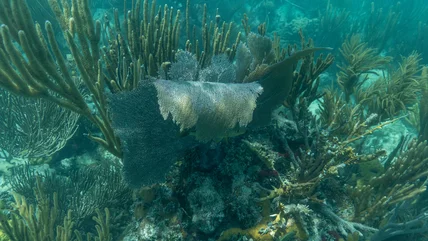
Nearly everything van Woodwind told me about was on display: lobster, red snapper, glassy sweepers, sea urchins, sea cucumbers, translucent shrimp, a snake eel, and even a sleeping parrotfish, a species which covers itself with a mucus-like film and stays near the bottom at night.
We also saw a few unexpected things - a snail-like sea hare and, most amazing, a squid with its tentacles flowing behind as it swam. We watched as the squid glided up into the beam of our lights, almost as if it were onstage, showing us its colors as it changed from blue to purple to pink, then finally turned and headed off into the darkness, leaving us ready to applaud. As it happens, such sightings are relatively rare.
''I've seen maybe three squid in the ten years I've been here,'' said van Woodwind. It was my lucky night.
On my last day in Bonaire I got up early to drive through Kralendijk one last time. Along the waterfront, a few people were out sweeping sidewalks and vendors from Venezuela were unloading fresh produce from a boat. The town was quiet and the shutters on the bright yellow buildings were pulled closed.
I looked back on the week and all I'd done. My legs were still sore from the biking. I remembered the parrots, the baby barracuda, the secret caves and the colorful dancing squid. And I remembered the advice I'd been given upon my arrival to the island: To see what's happening in Bonaire you really do have to slow down.
Posted online 06/01/00.